Store replenishment runs on a clock, and the distribution center behind it is built to hit that clock every night. A retailer's regional DC has to cut a trailer into store-ready loads, stage them by route and have the doors open when the first driver arrives. We build the shells, slabs and truck courts for that rhythm, whether the owner is a national chain, a regional grocer, a specialty retailer or a wholesaler that serves independents.
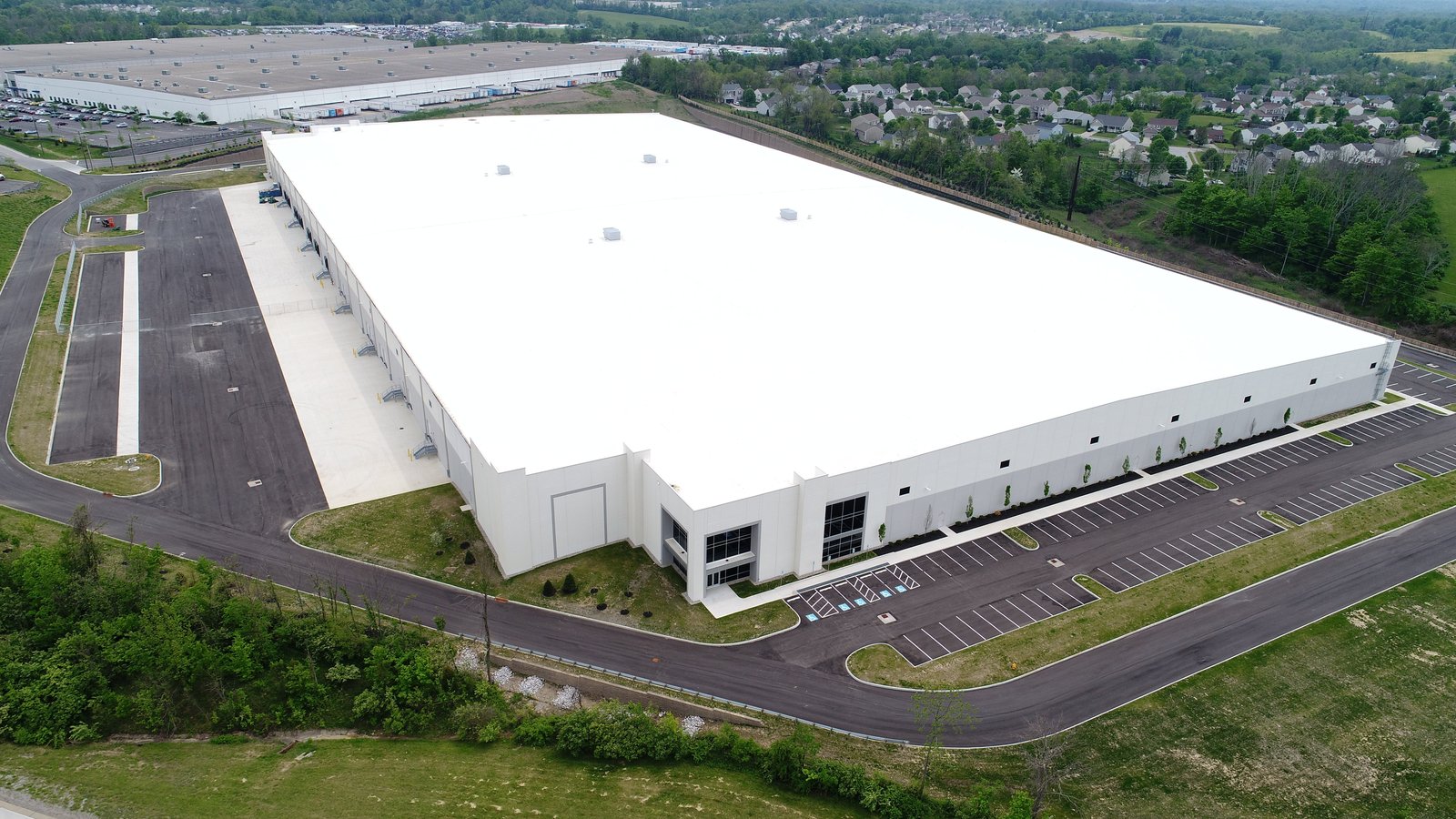
Retail distribution rewards simple geometry. Wide column bays keep conveyor and sortation flexible, a generous truck court lets store trailers stage without blocking inbound doors, and a dock count matched to store volume keeps outbound loading from stacking up. The mistakes we see most often are too few doors on the store-delivery side, a trailer yard cut by a drainage easement and an office wing planted where the next expansion bay belongs.
Our distribution center construction and cross-dock facility work covers both the full-case DC and the flow-through building that moves freight without putting it on a rack.
From Store Count to Dock Count
We start from the store list. Number of stores, delivery frequency, case cube per store and cutoff times produce a daily outbound trailer count, and the dock count follows from that. We then check inbound receiving separately, because vendor deliveries arrive on a different rhythm and often in larger lots. Planning both sides together stops a design from working only on paper.
Next we model truck movements on the site: queue length at the gate, turning radii, staging depth and fire lane clearance. Retailers often add a drop-trailer program, so the yard carries hundreds of idle trailers at once, and the paving, lighting and drainage design reflect that load rather than a typical visitor count.
Retail Corridors That Drive Demand
Colorado's retail growth shows where distribution capacity is needed. Orchard Town Center in Westminster has more than 90 specialty retailers at I-25 and 144th Avenue. At the I-25 and U.S. 34 interchange, Centerra in Loveland and Johnstown combines shopping centers, a mall and a medical center. A 2022 report described a Highway 60 and I-25 project in Johnstown planned for more than 1,000 housing units and more than 1 million square feet of retail, at an interchange passing more than 99,000 vehicles daily.
Each new rooftop and retail center adds store deliveries, and the DC that serves it has to sit within a workable drive. That is why northern Weld County and the I-25 corridor between Fort Collins and Loveland are drawing industrial interest. Northland Business Park, off U.S. 85 at Fort Lupton, sold 316 acres on November 18, 2024, with 103 acres of shovel-ready land across 15 parcels.
Dock, Court and Floor Packages for Retail Flow
A retail DC leans on the same four packages every time. The dock equipment and leveler package must handle both store-sized trailers and long-haul trucks. Truck courts need concrete aprons for loaded trailers, and a floor that can hold a high-density conveyor line without cracking at joints.
For grocery and perishable programs, the plan includes a refrigerated zone. We describe that in our cold chain work for cold chain and food buyers, and the same approach holds for pharmacy and specialty items that need temperature control.
Edition Differences Across Retail Territories
A retailer serving stores across the state works under different building codes in different places. The Home Builders Association of Metro Denver tracker dated January 20, 2026 shows Adams County, Arvada and Castle Rock on the 2018 I-codes, Aurora and Arapahoe County on 2021, and Boulder, Golden and Cherry Hills Village on 2024. Colorado Springs, Fountain and Monument each adopted the 2023 Pikes Peak Regional Building Code, carrying the 2021 International Building Code, enforced by the Pikes Peak Regional Building Department.
That means a prototype DC drawn for one city is not automatically permit-ready in another. We build a code matrix for the retailer's target sites, flag differences that affect cost and give the design team a single checklist for each jurisdiction.
From Front Range DCs to Mountain Town Deliveries
Many Colorado retailers supply mountain and Western Slope stores from a Front Range hub. That adds route length, winter closures and driver hours to the logistics model, and sometimes a satellite cross-dock closer to the stores. We build in the Front Range metro, the Northern Colorado corridor, the Pikes Peak region and along I-76 to the eastern plains.
Sites near State Highway 52, which links I-25 to US 85 at Fort Lupton and I-76 at Hudson, are reachable from both north-south and east-west trucking lanes. We evaluate those lanes with the retailer before recommending a site, since the closest interchange is not always the fastest lane to the stores.
Opening Before the Holiday Reset
Retail has fixed seasonal resets, and a DC that opens late misses them. We schedule backward from the date inventory has to start flowing, then include racking, conveyor and WMS testing. If the schedule is tight, we recommend phased delivery: dock and receiving first, then storage, then the outbound sortation zone.
Pre-opening mock shipments help catch problems. We keep the site clear of construction traffic and finish punch list work in the weeks before the first live trailer so the operator can run drills without hearing a saw. We also confirm that fire alarm, emergency lighting, dock lighting and security systems are tested well ahead of the certificate of occupancy walkthrough, since a failed inspection on the last week is the most avoidable delay in a retail opening.
Send Us Your Store List
Share the store count, delivery frequency and target region, and we will return a dock count, a site layout and a schedule that lands before your next reset.
Common Questions
How many store doors does a retail DC need?
It depends on delivery frequency and trailer size. A rough start is one outbound door for every few stores served per night, adjusted for drop trailers and the length of loading windows. We model the numbers with your store list, and we also test peak holiday volume to avoid a design that works only in July.
Is a cross-dock cheaper than a full DC for retailers?
Per square foot, usually yes, because there is less racking and a smaller footprint. But a cross-dock only works when freight can move within a day or two. For fast-moving goods it may be the right choice; for slow-moving items, a full DC is better.
Can one DC serve both stores and online orders?
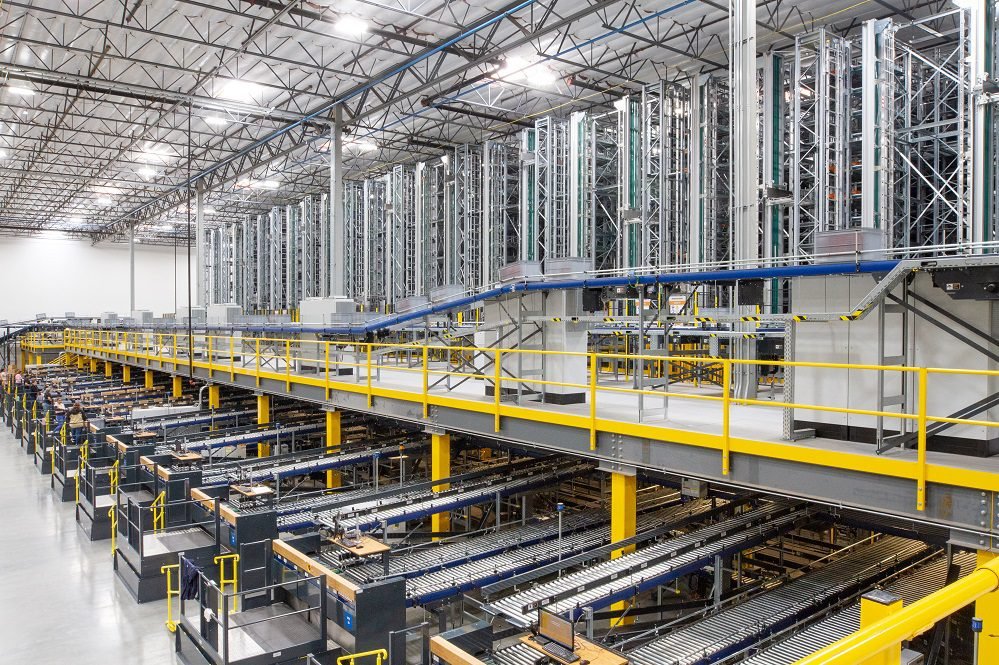
It can, but the two flows use different layouts. We often separate the e-commerce zone with its own mezzanine and pack area, a pattern covered in our work for e-commerce fulfillment operators.
What are the common surprises on retail DC sites?
Utility service capacity, stormwater detention for the truck court, and expansive soils. We check all three during due diligence, before the owner closes on land.