Crews, concrete and steel all have to travel to reach a Sterling job site, which sits about 128 miles from Denver, and a builder who prices that haul honestly wins the bid because the owner sees the real number on day one. We treat remote-site logistics as a scope item: where the crew stays, where the concrete is batched, how steel is staged and what happens when a delivery is late. Owners in northeast Colorado have been burned by estimates that ignored the drive.
What Sterling offers a warehouse user is rail and highway together. Union Pacific and Burlington Northern both provide rail service to the city's industries and businesses, and the city's economy is based on agriculture along with oil and gas production. Interstate 76 serves Sterling through its business loop, which ends at a diamond interchange at exit 125 where US 6 continues east; US 138 and State Highway 14 also serve the city, which sits at 3,931 ft elevation.
We build for the users that economy produces: farm-input suppliers, grain and feed handlers, oilfield service companies and regional distributors who want a rail option without the price of the Front Range.
Mobilizing 128 miles from the metro
Sterling had 13,735 residents in 2020 and is about 128 miles from Denver. That distance shapes three choices. First, we use local concrete, aggregate and trades wherever they are competitive, and we tell the owner which scopes are local. Second, we keep a core crew on site for the duration instead of commuting daily. Third, we stage materials in bulk, so a single missed truck does not halt a pour.
The same corridor leads to Fort Morgan and Brush along I-76, so crews can move between projects, and an owner with more than one site on the eastern plains gets a single contact and a shared schedule.
What a rail line adds to a building
A rail connection changes the economics of a warehouse that handles heavy or bulk goods such as fertilizer, seed, packaged feed, building materials and oilfield supplies. Product arrives by car and leaves by truck, so the building becomes a transload point. That requires dock doors on the rail side, floors that handle the load from forklifts working in and out of cars, and a truck court on the opposite side.
We lay out a cross-dock arrangement that keeps rail and truck traffic separate and supports a fast turn. If a spur is not yet built, we shape the site so it can be added later. Both railroads have their own requirements for track and clearances, so we bring the owner and the railroad into the conversation early.
The structure we manage most closely
For most Sterling buyers we recommend a pre-engineered metal building with a concrete slab, because the frame is fast to erect and economical on wide spans. We schedule, supervise and inspect the trade partners who form and pour the foundation and slab, erect the frame, hang the wall and roof panels and install the overhead and dock doors. That limits the number of outside subcontractors who must travel to the site.
The slab receives particular attention. Heavy forklifts and loaded rail-to-truck transfers wear a floor quickly, so we design joints and finish for abrasion resistance, and we describe our approach to industrial concrete floors in the proposal. Curing in the dry, windy conditions of the plains is managed with covers and curing compound, not left to chance.
Buildings for the agricultural economy
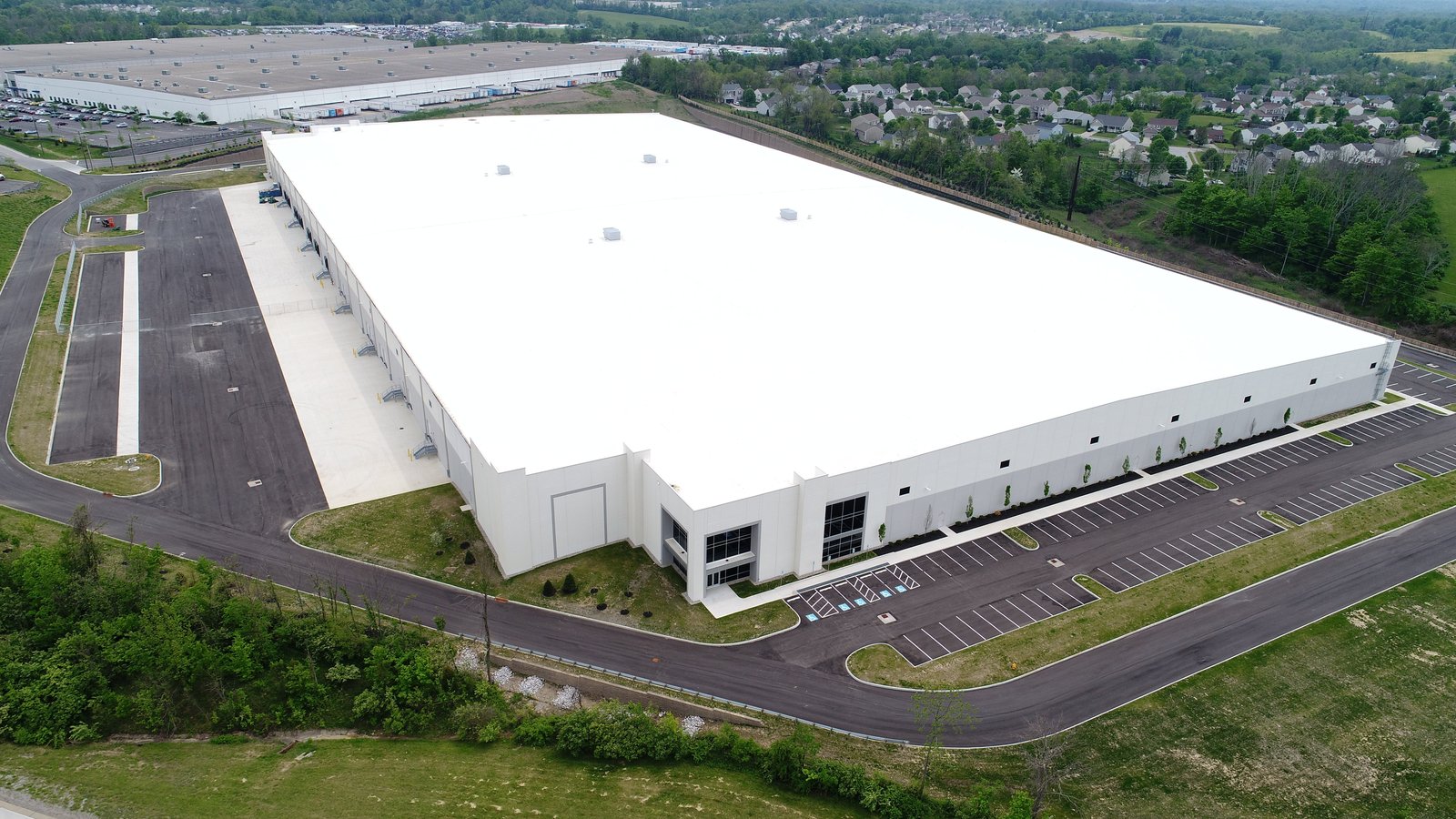
Typical scopes include a 40,000 to 120,000 square foot warehouse with a mix of dock-high and grade-level doors, a covered loading area, a small office and a yard graded for truck turning. Farm-input suppliers want chemical-rated storage with containment; feed handlers want clean, dry space away from moisture. We separate these needs in the design and arrange fire protection to suit each commodity.
Seasonal peaks drive the layout. A building that must hold product for a planting or harvest period needs generous receiving space, extra dock positions and room to stage pallets. We ask the operator for the peak week, not the average week, and design.
Honest line items for a distant site
Mobilization, per diem, material hauling and weather days all show up as separate lines in our budgets. We list them so an owner can compare our price with a local builder's on equal terms. On the building itself, cost follows the same drivers as elsewhere: clear height, door count, insulation and the extent of finished office space.
Value engineering has more room in a rail-served building than in many others. A smaller office, fewer overhead doors on the truck side and a simpler roof can pay for the spur or the transload equipment. We offer these trade-offs in plain terms so the owner can choose where to spend.
Plains weather and rail-adjacent work
Wind, winter cold and summer heat all affect work on the plains. We set wind limits for sheeting and panel handling, plan heated concrete placements in cold weather and schedule heavy labor around the afternoon heat. Crew hydration, shade and rest breaks are written into the site safety plan.
Working beside an active rail line adds requirements: flagging, clearance envelopes and written coordination with the railroad. We do not allow equipment to swing across the track without permission, and we keep material away from the right of way. For tenants in logistics and 3PL operations, the same procedures apply to their daily work once the building is occupied.
Send the commodity and the rail question
Tell us the parcel, the product you handle, the building size and whether you want rail. We will return a scope, a schedule and a budget range for a Sterling warehouse.
Common Questions
Why do remote-site costs matter so much in Sterling?
The job is about 128 miles from Denver, so labor travel, material hauling and staging cost more. We show these as separate lines and look for local sources of concrete, stone and trades to hold the price down.
Can I get a rail spur on my property?
Union Pacific and Burlington Northern both serve Sterling, but a spur depends on the parcel's location relative to the track and on the railroad's approval. We help evaluate it early and leave the site ready for a spur if it is not built immediately.
What building type suits a farm-supply warehouse?
A pre-engineered metal building with a concrete floor is usually the most economical choice. It can be built wide and clear, with the doors and containment required for the products stored. We confirm fire protection with the insurer.
How do trucks reach the interstate?
I-76 serves Sterling through its business loop, which ends at a diamond interchange at exit 125 where US 6 continues east. US 138 and State Highway 14 also serve the city. We map the route from your parcel to the ramp and check turning space.
Will weather delay construction?
Sometimes. Wind, snow and cold can affect concrete work and panel erection. We schedule around the season, build in weather days and protect slabs and materials so delays are short.