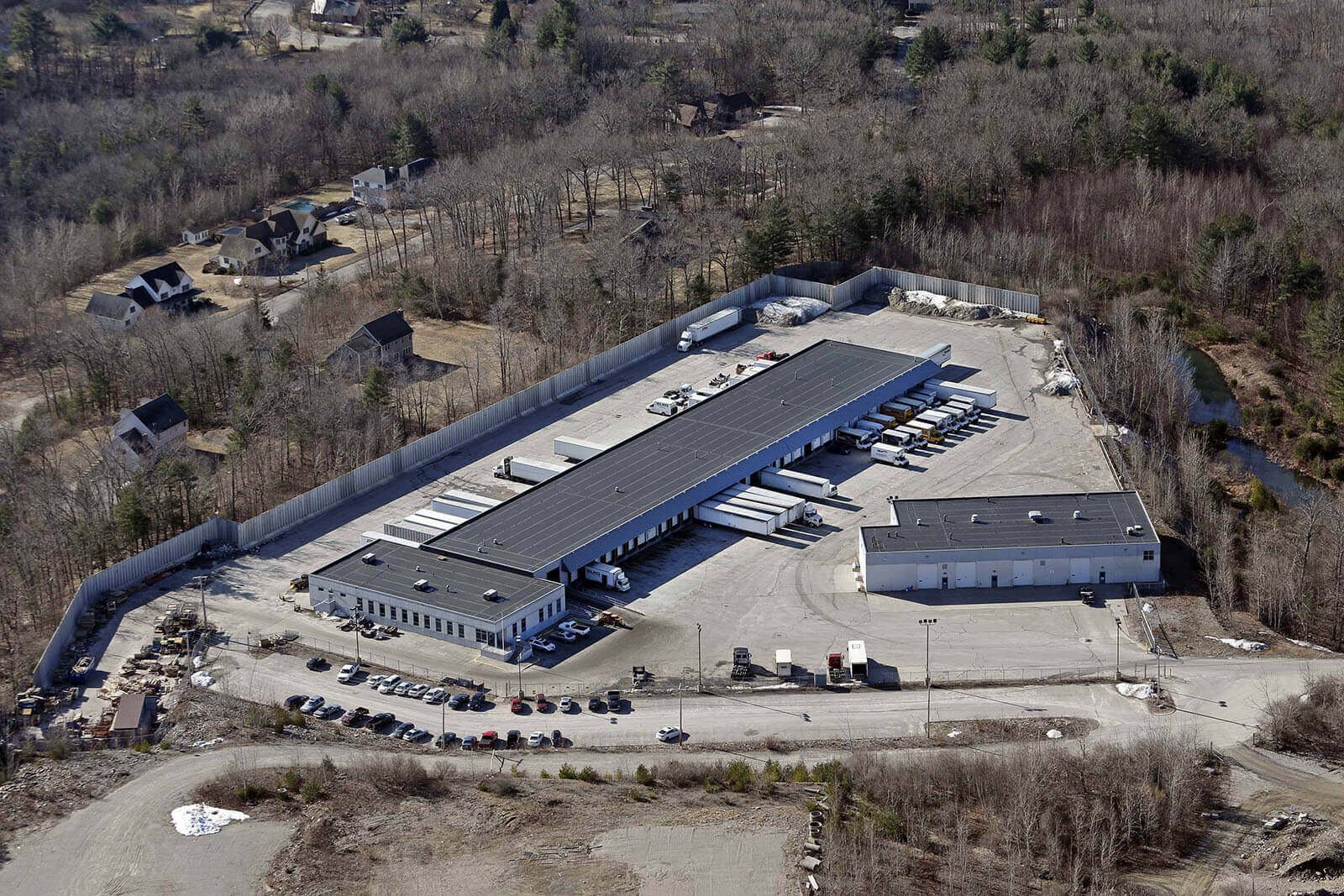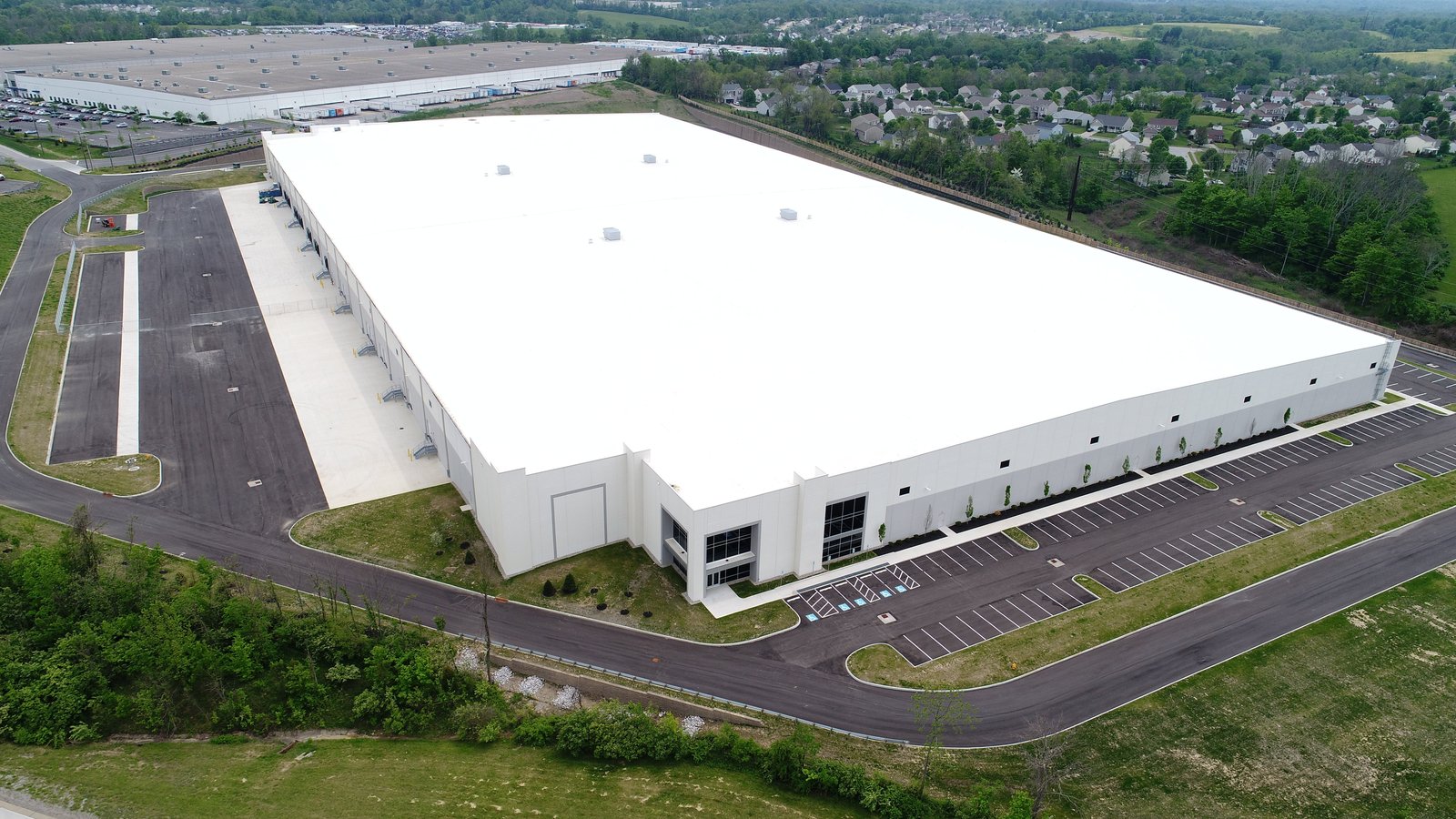

Five routes meet at Limon: I-70, US 24, US 40, US 287 and Colorado Highway 71. The town calls itself the Hub City, and it is served by the Union Pacific Railroad and the Kyle Railroad, which ends in Limon and interchanges with Union Pacific. Freight that comes through a place like that wants to be handled quickly, and the building that handles it is a truck terminal or cross-dock: a long, narrow structure with doors on both sides and almost no storage.
We build terminals and cross-docks for LTL carriers, parcel networks, regional distributors and 3PLs that move freight on trailers rather than store it on racks. The geometry is the product. Door count, door spacing, building depth, apron depth and trailer stalls are set by freight volume, and they dictate how the site is shaped. Pavement is as important as walls, because a terminal puts heavy trailer wheels on concrete every hour of the day.
If your freight stays longer than a day or two, a distribution center may be a better fit, and a warehouse is better still for long-term storage.
Corridors that make a terminal work
Commerce City says it has two Class I freight rail lines, sits where three major interstates meet and is directly adjacent to Denver International Airport. I-70 and I-25 meet at the interchange known as the Mousetrap, and with I-225 they form an inner beltway around Denver. A terminal near that junction reaches most of the metro with short line-haul and short pickup-and-delivery routes.
Outside the metro, the logic is different. In Sterling, I-76 and its business loop serve the city, and Union Pacific and Burlington Northern both provide rail service to its industries. Terminals on the plains serve agricultural and energy freight, and the Colorado Springs and Pueblo corridors serve the southern side. We start any site search by looking at where the freight originates and where the drivers live.
What a terminal includes
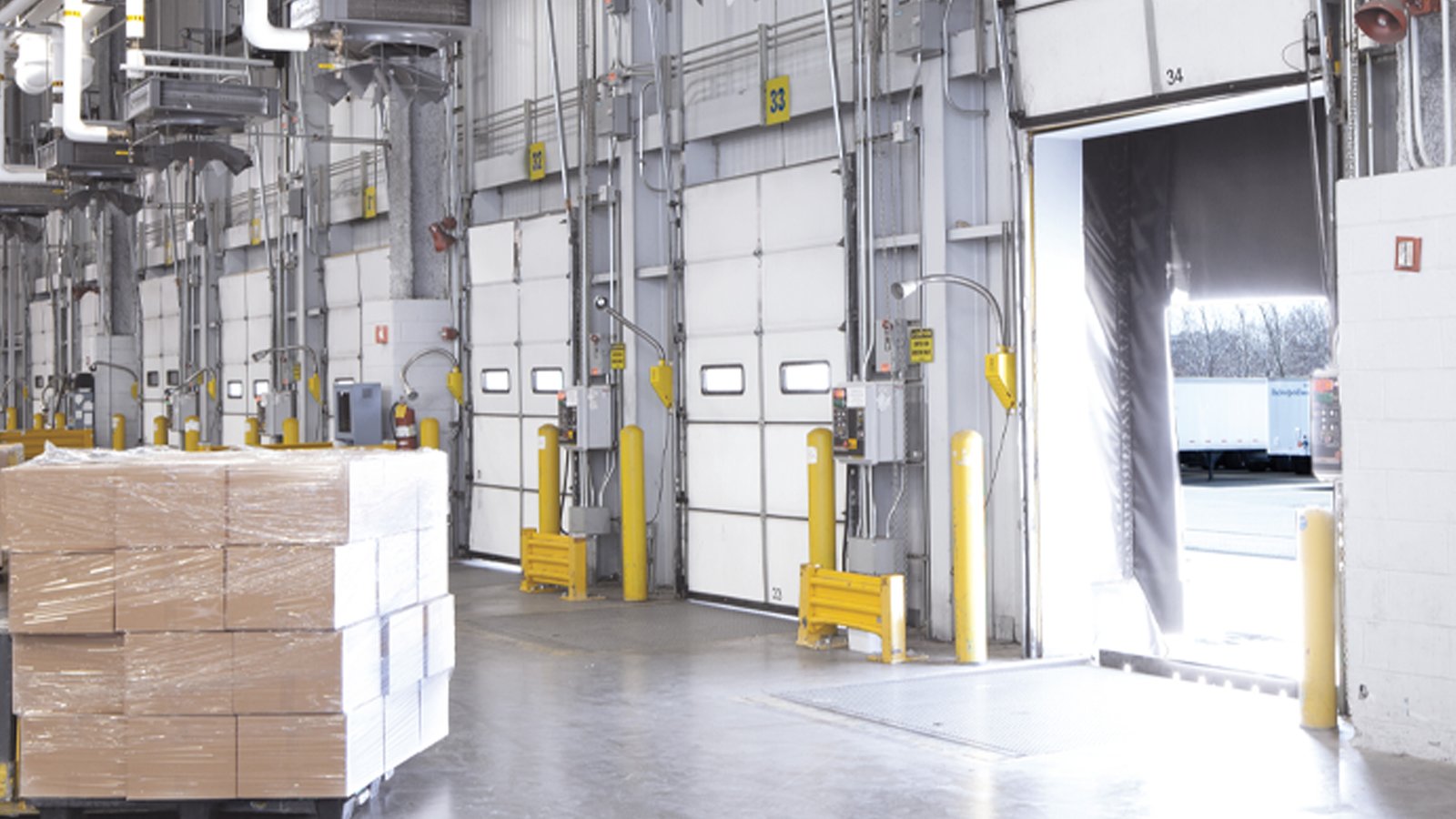
The core is a narrow dock building with doors on one or both sides, sized in a standard pattern: dock-high doors at 12 to 14 foot spacing is common, with levelers, seals and lights at each. Our cross-dock facilities package includes the building, interior sort floor and the supporting offices, break rooms and driver areas. Dock hardware is covered separately under dock equipment and levelers.
The yard is half the project. We design pavement, striping, drainage, lighting and fencing as a system. Our truck court and trailer yard work covers heavy concrete aprons at the dock, asphalt in parking areas, and the transition between them where trailers turn tight.
Where we build terminals
Most terminal demand is along the interstates. In the metro, that means the northeast side near I-70 and E-470, the north I-25 corridor, and the west side where I-70 climbs toward the foothills. Further out, we look at Fort Morgan, where I-76 meets Highway 52 at exit 80, and at Limon on the eastern plains.
Our Limon page describes what we know about that crossroads. For operators who need both a terminal and a warehouse, we can site them together and share the truck court.
Safety in a high-traffic yard
Terminals are busy. Trailers, yard tractors, forklifts and pedestrians share a small area, so the site plan must separate them. We design clear pedestrian paths, driver parking away from truck lanes, and lighting that makes the dock visible at night.
During construction, we maintain site access and keep deliveries off the paved yard until concrete reaches strength. If the terminal is an expansion of an existing one, we phase work in sections so freight keeps moving.
How we plan door counts and turns
We start with throughput: pieces per day, trailers per door per shift, and peak surge. From that we calculate doors, then test the layout on the parcel. A terminal that needs 120 doors will not fit on a lot sized for 60, no matter how clever the drawing.
Then we ask about the sort. Will freight be moved by forklift, pallet jack or conveyor? Is the floor flat enough for the equipment? Do trailers need to be spotted in a certain order? Mountain routes add their own constraints: Vail Pass carries I-70 at 10,662 feet with grades up to 7 percent and two runaway truck ramps, and carriers that run it want terminals set up for chain-up, inspection and driver rest.
Freight operators we support
Terminals serve logistics and 3PL operators who run networks of terminals, as well as regional carriers and shippers with private fleets. Retail distribution networks use cross-docks to consolidate store deliveries, and manufacturers use them to break bulk loads into customer shipments.
If you are comparing sites, we can build a quick cost model of the building, the yard and the off-site road improvements.
Schedule drivers
Terminal schedules depend on paving as much as on structure. Heavy concrete needs time to cure, and winter can delay pours. We plan paving in phases so the dock opens even if the far end of the yard is still under construction.
Utilities, drainage and permits control the start. We pre-meet with the jurisdiction on access, driveway permits and traffic studies, which can be a hidden schedule risk when a terminal adds trucks to a public road. Lighting, fencing, scale and fuel or wash areas add their own approvals, so we list every one of them in a permit tracker on the first day and review it weekly until the last sign-off.
Size your terminal
Give us your daily freight, trailer mix and target corridor. We will propose a door count, a yard layout and a budget.
Common Questions
How many doors does a cross-dock need?
The door count comes from volume and turn time. We work from your daily freight, trailer sizes and shift pattern, then test the building on the parcel. Many operators include a few extra doors for growth.
What pavement is best for a truck court?
Heavy concrete at the dock apron and in stopped-load areas, and asphalt for lower-stress lanes. The design depends on soil, trailer weights and frequency. We use geotechnical data and pavement design to avoid early failure.
Can a terminal be built near a rail line?
Often yes, but spur design, grades and clearances need railroad review. We coordinate site plan and track layout early.
How does winter affect terminal construction?
Cold slows concrete work and can shut down paving. We schedule critical pours before winter or use cold-weather methods, and we protect finished surfaces from deicing chemicals.
Should I build a terminal or lease one?
It depends on volume, location and control. Building makes sense when you need a specific layout or a long-term site. We can model costs for both options.