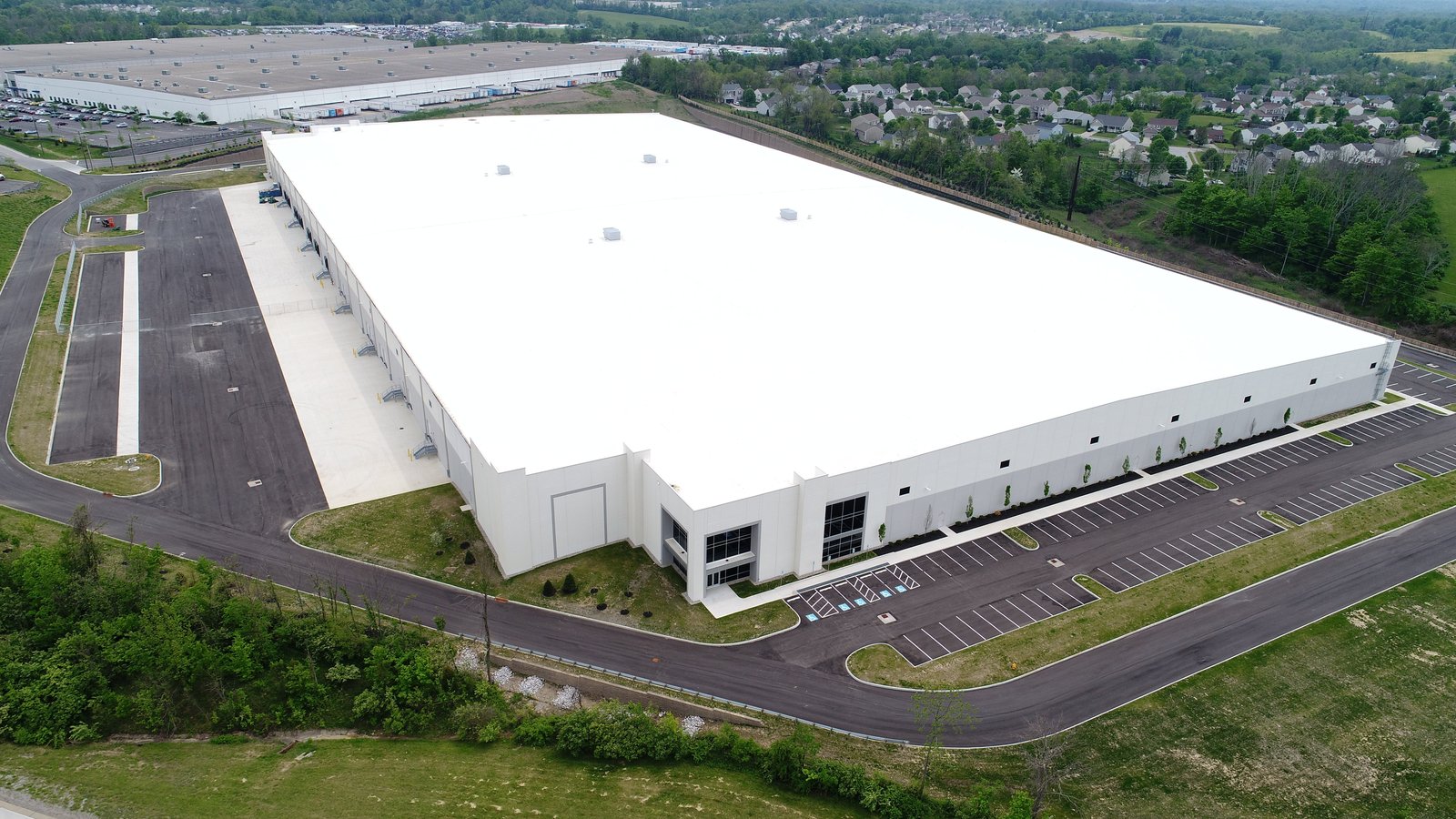

Hub City sites reward the builder who plans the yard before the walls. Limon calls itself the Hub City because Interstate 70, US 24, US 40, US 287 and Colorado Highway 71 all meet there, and that means trucks arrive from five directions with five different appetites for turning room. A building here lives or dies on its apron depth, its trailer stalls and the way a yard truck moves between them. We build the yard and the dock line as one design, then wrap the structure around them.
The rail side adds a second mode. Limon is served by the Union Pacific Railroad and by the Kyle Railroad, which ends in Limon and interchanges with Union Pacific there. Transload buildings, grain and bulk handlers and regional distributors that want a rail option all look at that interchange, and we check whether a lot can reach the track before we draw a rail-side door.
Limon is about 83 miles southeast of Denver in Lincoln County, with 2,043 residents at the 2020 census, on the eastern plains at 5,378 feet. It is a small town on a very large freight network, and the buildings that work are sized for the freight, not the town. Expect relay and consolidation space, not a mega-box. Our job is to tell you early whether the numbers support the building you have in mind, and to price the version that does.
Who uses a plains freight hub
Our Limon work is for carriers who sort and relay freight, regional distributors serving eastern plains customers, and retail distribution operators who need a mid-route cross-dock. Each reads the building differently, but all want the same three things: door count, yard depth and speed in and out.
Parts and supply businesses use the same geometry. A distributor serving rural customers across a wide area needs a place to stage product, and the automotive parts distribution model, with same-day delivery windows and tight pick times, translates well to a plains hub when the building is designed around dock turns.
Five routes, two railroads, one decision point
Distance from the Denver metro is the point. At about 83 miles, Limon is beyond a one-day local drayage radius and inside a convenient relay distance, so freight can be consolidated here before a final run to Denver or Commerce City. A carrier that places a terminal in Limon is trading land cost for line-haul position.
We do not claim any specific user will take that trade. We help a developer or operator test it: lane volumes, driver hours, cost of land and the cost of the building. If the numbers work on a spreadsheet, we price the shell, the slab and the yard to match.
The building, the slab and the yard
Most Limon projects are a narrow dock building with doors on one or both long faces, an office at one end and a deep concrete apron outside. We grade the pad, place the slab with dock-height elevations, erect tilt-up panels or a steel frame, and install the dock package. The yard gets heavy concrete at the apron and trailer pads, and asphalt in lighter zones.
Pavement is the quiet cost. A trailer yard that carries loaded tractors every hour needs a designed section, joint plan and drainage, not a parking-lot detail. Our truck court and trailer yard scope covers it, and we price the pavement as a separate line so the owner can see the trade-off between concrete and asphalt.
Wind, weather and a realistic building season
On the open plains, wind is a construction variable. We set wind limits for crane picks, brace every tilt-up panel until the roof diaphragm ties them together and delay lifts when gusts exceed the limit. Winter concrete practices apply at 5,378 feet, and we plan for them from the first pour.
An F3 tornado on June 6, 1990 destroyed most of Limon's business district and injured 14 people. We do not use that as a sales line. It is a reminder that roof attachment, panel connections and wall-to-roof ties on a plains building deserve careful engineering, and we ask the structural engineer to document the wind design basis in the drawings.
Working the I-70 and plains corridors
We mobilize from the Front Range and the Pueblo area, which puts crews within a few hours of Limon. Material for large projects, such as steel, panels, doors and electrical gear, is staged ahead of the pour so the town is not asked to supply it. We also plan housing and meals for the crew on long jobs, since a town of 2,043 has limited capacity.
Other plains towns present similar conditions. Lamar, on US 50 and US 287 to the southeast, shares the long haul and the ag-based economy, and we plan the two markets with the same logic about relay position and building size.
Terminals, transload and storage buildings
A truck terminal or cross-dock is the core product here, but the same lot can host a transload building with rail-side doors, a heated storage building for supplies or a shop for fleet service. We scope each one with its own slab, its own door package and its own fire protection design.
Because a plains town has limited labor, we design buildings for low-maintenance operation: durable finishes, sturdy dock equipment, simple HVAC and a yard that drains. Our dock equipment and leveler package is chosen for service life rather than for the lowest first cost.
Bring the lane map
Send your lanes, door count and yard needs. We will check the lot, the rail option and the permit path, then return a plan and a budget range.
Common Questions
Why is Limon called the Hub City?
Five routes meet there: I-70, US 24, US 40, US 287 and Colorado Highway 71. Union Pacific and the Kyle Railroad add rail. For a carrier or distributor, that makes it a place where freight naturally changes direction or trailers.
Can a Limon building take rail?
It depends on the lot. The Kyle Railroad ends in Limon and interchanges with Union Pacific there. We ask the railroad about the track near your lot before we design a rail-side dock.
How do you design for wind on the plains?
We ask the structural engineer to document the wind basis, tie the panels to the roof diaphragm, brace panels during erection and set wind limits for crane lifts. A tornado destroyed much of the business district in 1990, which is a reminder that these details matter.
How big should a Limon cross-dock be?
It depends on door count and freight volume, not on the town. Many relay terminals are 20,000 to 60,000 square feet with deep aprons. We size from your lanes.
How long does a project take?
Permit review, utility availability and long-lead items set the date. We build a backward schedule from your target start-up and call out milestones that need early orders.