Van counts, not trailer counts, set the geometry of a last-mile parcel hub. The building takes in line-haul trailers at one side and sends out dozens or hundreds of delivery vans on the other, usually within the same sort window. Dock doors, trailer parking and a tight van lot all compete for the same acreage, and a site plan that gets one wrong strangles the whole operation at peak.
We build last-mile hubs and delivery stations for carriers, retailers and the logistics companies that run for them. These buildings are shallower than a classic distribution center, with a wide frontage and a lot of doors, and they are close to the customers they serve. Their schedules are short because carriers sign leases against delivery dates, and a missed opening can mean a missed peak season.
Here is how we approach the site, the building and the schedule for a Colorado parcel hub, from the Front Range to the interchanges farther out.
Why parcel hubs favor shallow-bay product and interchange sites
Last-mile buildings run on short drives to rooftops, so they locate near population and a ring road. They also run on tight timetables, so interchange access matters more than a rail spur. Compark470, two shallow-bay industrial buildings totaling about 133,133 square feet near Compark Boulevard and Chambers Road in Parker, had its groundbreaking reported May 21, 2026, with completion expected in Q1 2027 and access to E-470 and I-25. That building type, with its shallow depth and abundant doors on both faces, adapts well to van operations.
The airport corridor matters for the carriers that connect air and ground networks. Peña Boulevard links DEN to I-70, and E-470 has a full cloverleaf interchange with Peña Boulevard giving the 47-mile toll road direct airport access. A hub near that junction can serve both the airport and the metro ring. We study the road network around a site and test the van departure routes before the site plan is fixed, so that the first morning's wave leaves the lot in minutes, not in a queue.
Sites we serve across the Front Range and Weld County
The densest demand is along E-470 and I-25, from the south metro to the northern suburbs. Hubs also appear on the Weld County side, where land is more available and the road network ties together north and south. State Highway 52 passes US 287 and reaches a diamond interchange with I-25 at exit 235 near Dacono, Frederick and Firestone, and east of I-25 it reaches US 85 at Fort Lupton and I-76 and US 6 at Hudson, so the highway links I-25 to I-76 across Weld County.
That cross-county link is valuable for a hub that wants to reach both corridors without entering central Denver. We work in Frederick and the neighboring Tri-Town communities, in the airport area and around the Parker and Lone Tree interchanges. For each site, we evaluate zoning for van parking and overnight charging, truck turning movements, and the relationship between the sort building and the employee parking field.
The building and the lot
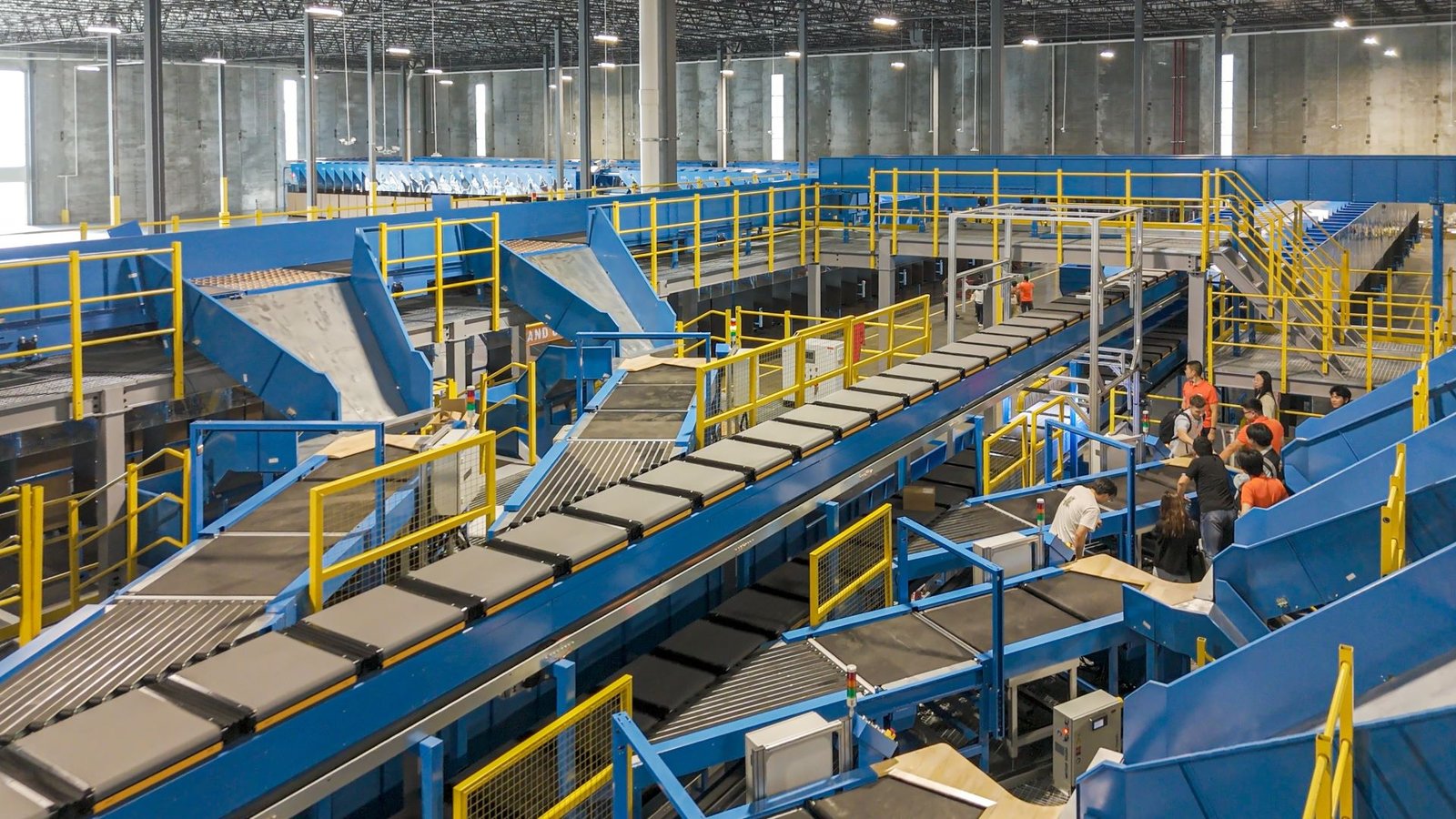
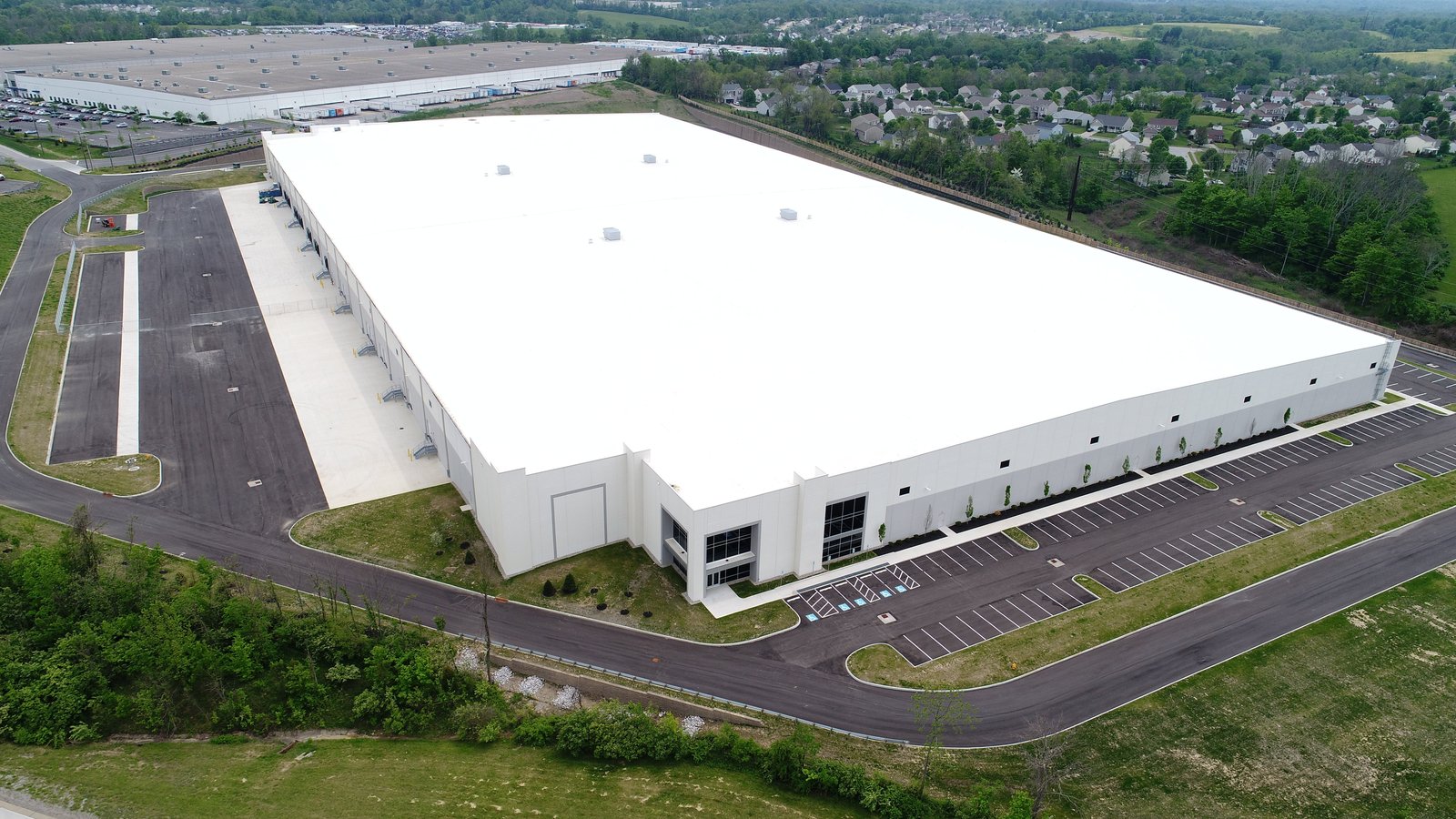
A parcel hub has two main parts. Inside, the sort floor holds conveyors, sorters and staging lanes under a clear height that is usually moderate, with a high door count and wide aisles. Outside, a van lot holds the delivery fleet, and a trailer lot holds line-haul trailers. A hub frequently has a two-sided cross-dock configuration that puts trailer doors on one side and van-level doors on the other.
Our scope includes grading, utilities, paving, the building shell, an office and driver support area, and all the site elements that make the operation work: employee parking, driver entrances, trailer drops, lighting, security fencing and EV charging infrastructure if the tenant requires it. The paving specification matters here, because vans run in tight patterns and turn on the same spots all day. Our approach to truck court and trailer yard construction covers concrete aprons at the dock and a durable pavement section in the van lanes.
Designing for peak, not average
Parcel networks live and die on peak. We ask the carrier for peak-day volume, wave timing and van count, and we simulate the flow of trailers, vans and employees through the site. The goal is to avoid queues at the gate, conflicts between pedestrians and vans and bottlenecks at the sorter induction. We share that analysis with the carrier's engineering team, and we refine the site plan until the flows are clean.
We also plan for equipment changes. Sorters and conveyor lines evolve every few years, so we leave the floor clear, the power distribution flexible and the roof structure ready for additional loads. A hub built with some spare capacity can switch to a new e-commerce fulfillment program without major work, which protects the landlord's re-leasing position. The same thinking appeals to owners who serve e-commerce operators who want to change formats quickly.
Fast delivery without cutting corners
Short-schedule hubs use the same principles as other fast-track work: early procurement, parallel design and permitting, and a clean critical path. We release grading and utilities as soon as civil drawings are approved, order structural steel or tilt panels in advance, and pre-fabricate where possible. Electrical gear for sorters and chargers has long lead times, so we confirm the utility and equipment sequence in the first week.
We then lock the opening date backward from the carrier's peak season. If the building must be ready for equipment install by a set date, the roof and slab must be complete a few weeks before that. Because carriers' own contractors arrive before turnover, we publish a site access plan and work in zones. For retail distribution customers who share space or add a parcel operation to an existing building, we coordinate separate schedules so each operation can open on time.
Opening a delivery station?
Tell us your peak volume, van count and target opening date. We will test the site, size the building and doors and lay out a schedule that meets your season.
Common Questions
How many dock doors does a last-mile hub need?
The count depends on trailer volume and the van load-out method. Many hubs have a modest number of trailer doors and a large number of van-level or grade-level doors. We size doors from your peak-day volume and test the layout with a flow simulation before the design is fixed.
Can a last-mile hub be built in an existing building?
Sometimes. Existing buildings with enough frontage, a deep truck court and a good slab can be converted, but many lack the van parking or the door count. We review the building and site against your operating requirements and give you a candid assessment.
What about electric vehicle charging?
Fleet electrification adds large electrical loads, and the utility needs to study and supply them. We lay out conduit and pad provisions for future chargers even if you start with fewer, and we begin utility coordination at the start of the job so that power arrives with the building.
How fast can a parcel hub be delivered?
Timeline depends on the site, the permit, and the building type. Shallow-bay buildings on a prepared site can move quickly, particularly with early procurement. We provide a schedule at the start that shows each milestone, so you know when the permit, the roof and the turnover are due.
What are the common mistakes in hub site design?
Underestimating van parking, putting employee parking where vans need to turn, and putting a gate where queued trailers block the street. We catch these through a flow study before the site plan goes to the city.