Freight that serves the Western Slope has few places to consolidate, and Grand Junction is the largest of them. Interstate 70, US 50 and US 6 meet here, with I-70 running east toward Glenwood Springs and Denver and west toward the state line, and US 50 linking the city to Montrose, Gunnison and Pueblo. For a 3PL, a regional distributor or a developer reading absorption, the question is how much building the western end of the corridor can support, and how fast it can be delivered.
We build the answer in tilt-up and steel: distribution centers, build-to-suit shells for regional users, cross-docks for carriers and spec buildings sized for the mid-market tenant. Every project begins with the site, because Grand Junction lots vary from river-bottom ground near the Colorado to benches and fill with different bearing and drainage conditions. We commission the geotechnical work, confirm utilities and pin down truck access to the interstate before we promise a number.
Rail is part of the picture. The Union Pacific Central Corridor, the Denver-to-the-west main line, runs through Grand Junction and is used by both Union Pacific and BNSF freight trains, and Amtrak's California Zephyr stops at Grand Junction Station. A user that wants a rail option has a corridor to look at, and we check track location and railroad requirements on any lot that might connect. Buyers also ask how the city compares with Montrose to the south on US 50 and with smaller markets such as Delta along the same route; we price each program in more than one place when the lane map supports it.
Why Grand Junction works as a western hub
The mix of I-70, US 50 and US 6, plus a rail corridor, means freight enters and leaves the city in several directions. A distributor serving the Western Slope can place inventory here and reach customers in several valleys with a one-day run. That is the logic behind regional distribution centers, and it explains why national carriers watch the market. East on I-70, Rifle and Glenwood Springs sit on the same freight line toward Denver, which means a Grand Junction building can serve as the western hub of a longer lane, with smaller relay buildings at each stop.
Demand also comes from people. Colorado Mesa University reported a record incoming freshman class in 2024 and CMU Tech enrollment up 15% in one year and 50% in two, with a new food hall, residence halls and expanded parking under construction as of August 2025. A growing campus feeds retail, housing and service demand, and those create more freight for retail distribution and service suppliers.
Snow load, frost and the county code
The Mesa County Building Department lists the 2024 International Building Code and 2024 International Residential Code as its adopted codes, and notes the 2026 NEC and 2024 Colorado Plumbing and Fuel Gas Code take effect January 1, 2027. Because codes are adopted locally, we confirm the edition and any amendments for each lot, inside the city or in the county, at the start of design.
Mesa County sets a non-reducible ground snow load of 30 psf for Grand Junction and the surrounding area, rising with elevation to 40 psf at 5,501 to 6,500 feet and up to 100 psf at 9,501 to 11,000 feet. The county page does not publish frost depth or seismic category, so we confirm both with the building department. These values go straight into the structural design of the roof and the foundations.
Distribution, fulfillment and user-specific shells
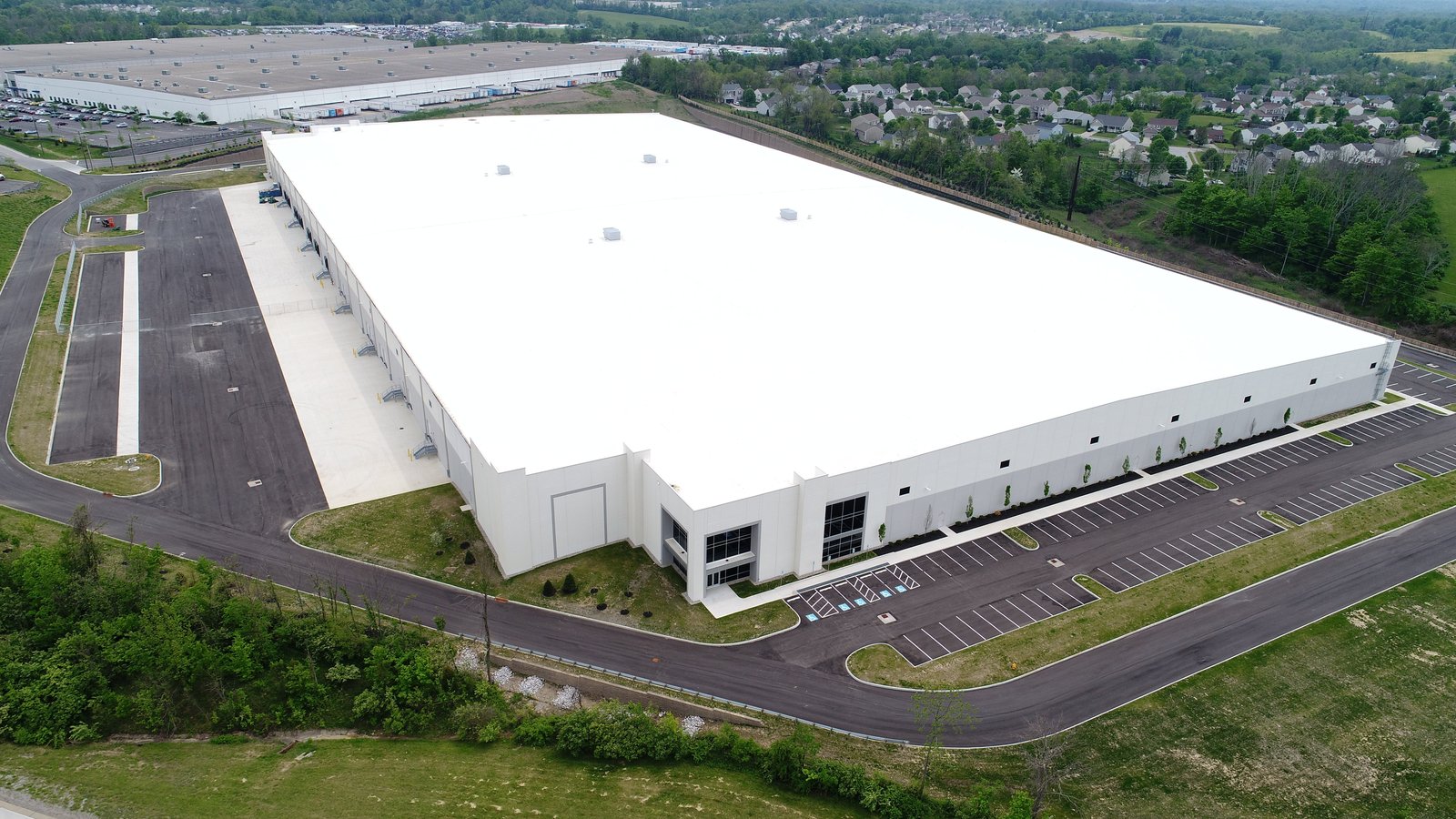
A distribution center is the core product, with clear heights of 28 to 36 feet, a dock line on one or both sides and trailer parking in a secured yard. Fulfillment and e-commerce users add mezzanine pick modules and need a column grid that fits conveyors; carriers want a narrow cross-dock with door spacing that suits freight.
For a developer, the question is flexibility. A shell with a 50-foot-by-50-foot grid, a 32-foot clear height and a dock line that can take either 9-foot or 10-foot doors rents to more users than a building designed for one. We can build that shell at a controlled price, and if a tenant signs mid-construction, we convert it to a build-to-suit warehouse scope without losing time.
Concrete, panels and the dock line
We supervise and inspect the structural concrete closely: footings, slab, tilt-up panels and dock aprons. On a distribution building the slab is the most scrutinized element, because forklifts, racking and automation all depend on its flatness and joint performance. Our tilt-wall warehouse process casts panels on the finished slab, sequences lifts around crane access and ties the panels to the roof diaphragm.
Dock equipment follows the tenant's trailers. We coordinate doors, levelers, seals and restraints with the operator and install them to align with the floor elevation, so the first trailer backs in without surprises.
Schedule from permit to turnover
The schedule starts with permit review and utility availability, and long-lead items such as rooftop units, dock doors and electrical gear determine the finish date. We attach dates to each and order early. For a tilt-up shell, the slab cures before panels are cast, panels cure before lifting, and the roof follows erection.
Grand Junction's climate allows year-round work with precautions. We plan cold-weather concrete practices for winter pours and hot-weather practices for summer, and we set wind limits for crane lifts. Turnover includes testing and commissioning of fire protection, dock equipment and building systems.
What drives a Grand Junction number
Snow load, clear height and fire protection are the structural drivers. A roof designed for 30 psf ground snow load is heavier than one for a lighter load, and a taller building needs more sprinkler capacity. We price each driver as a line so the owner can see the effect of a change.
Site work, utilities and truck court pavement follow. Grand Junction developers also look at incentives: Riverfront at Las Colonias is a 15-acre business park promoted by the Grand Junction Economic Partnership as shovel-ready real estate within the area's opportunity zones. We do not assume any program applies to your project, but we model costs so you can test one against another.
Send the program and the lease date
Tell us the clear height, the dock count and the date you need the building. We will confirm the code basis and return a schedule and a budget range.
Common Questions
Which building code applies in Grand Junction?
Mesa County lists the 2024 International Building Code as its adopted code. Inside the city or the county, the edition and amendments can differ by jurisdiction, so we confirm with the building department before design.
What snow load should the roof carry?
Mesa County lists a non-reducible ground snow load of 30 psf for Grand Junction and surrounding areas, with higher values at higher elevations. We use the value the department confirms for your lot and give it to the structural engineer.
Can a warehouse use rail in Grand Junction?
The Union Pacific Central Corridor runs through the city and is used by Union Pacific and BNSF. Whether a lot can connect depends on track location and railroad approval, which we confirm before design.
What does the airport add to the market?
Grand Junction Regional Airport, with commercial passenger service dating to 1946, broke ground in 2018 on a replacement for its 60-year-old Runway 11-29. Air freight and parcel users may look at nearby ground, though each site needs its own review.
What is a realistic schedule for a spec shell?
It depends on size, permit review and long-lead items. We build a backward schedule from your target lease date and tell you which milestones need early orders.