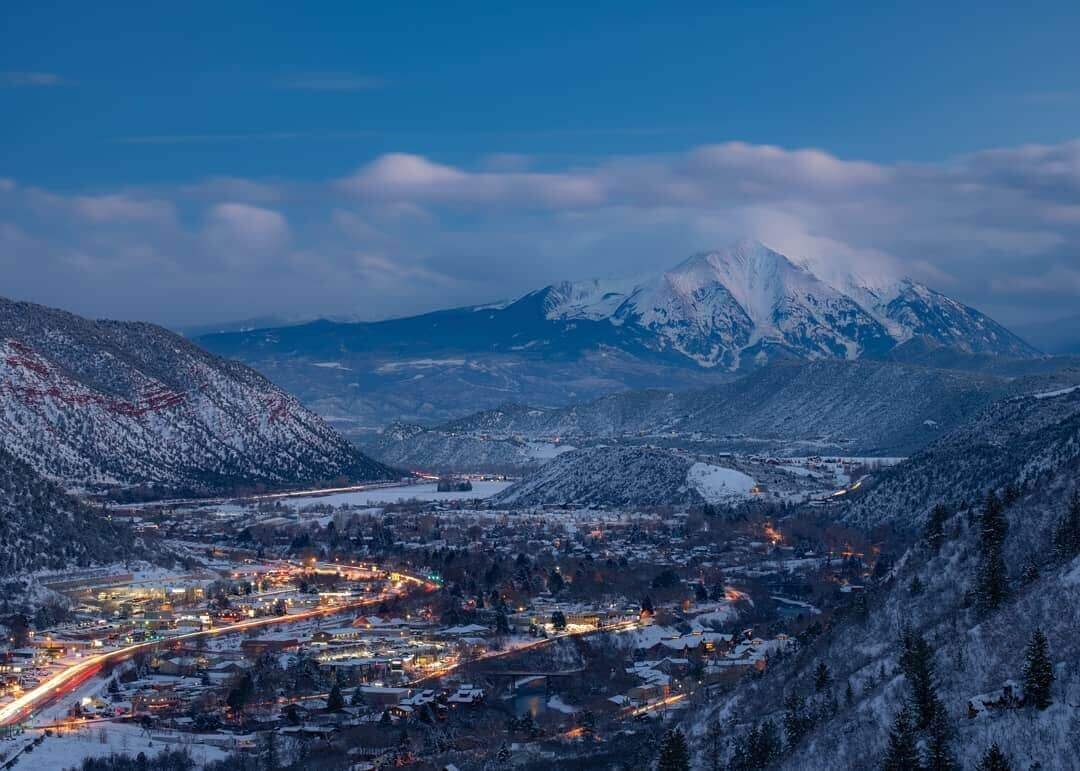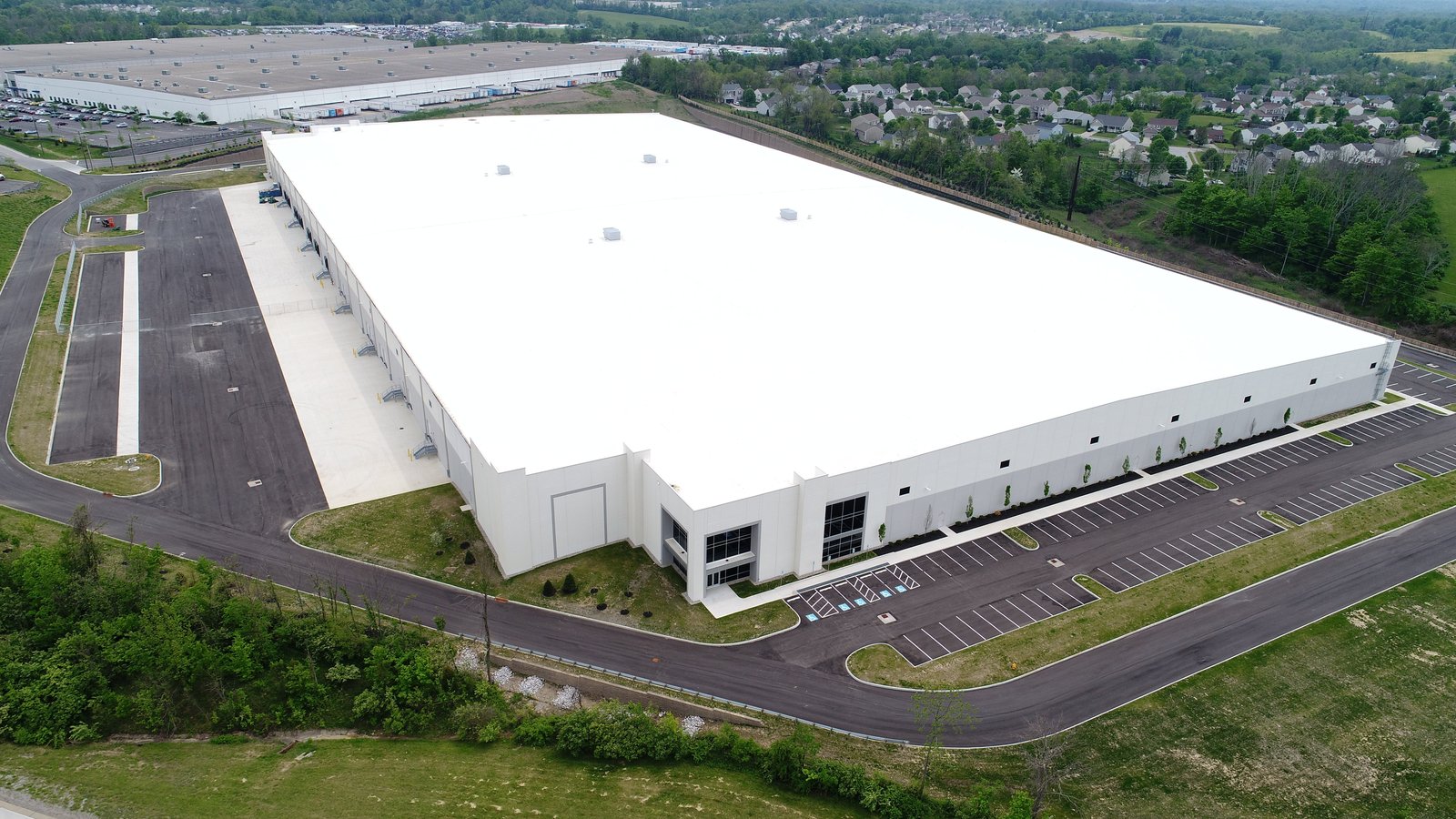

Buffer inventory is the reason to build a warehouse in Glenwood Springs, and the case gets stronger every time the interstate shuts. Glenwood Canyon carries Interstate 70 for 12.5 miles between near Dotsero and just east of Glenwood Springs, and rockslides closed the freeway there in February 2016 and again in July 2021. A distributor serving the mountain corridor that keeps two weeks of stock on the west side of that canyon keeps its customers supplied when a truck cannot get through.
We build for the operators who think that way: building-products suppliers, grocery and restaurant distributors, contractor-supply yards and parcel carriers who deliver up and down the valley. Their buildings are not huge, but they are dense. Racking runs high, doors are numerous and the site is tight against the river, the highway and the hillside, so every square foot of truck court has to earn its place.
Our work in Glenwood Springs starts with the constraints on the land and the sky: a ground snow load that scales with elevation, a mapped flood hazard on some parcels and a 36 inch frost line. We solve those on paper with the owner before a dollar is committed to steel.
Why inventory belongs on the west side of the canyon
An interstate closure hits a supply chain in a predictable way. Trucks queue, drivers run out of hours, and anything perishable or job-critical loses its window. A building outside the canyon lets a distributor stage the next day's loads close to the delivery area and reroute when a closure is announced. Glenwood Springs is the county seat of Garfield County, and the town's position at the canyon's mouth is a natural handoff point for freight moving between the Front Range and the Western Slope.
We do not promise a closure will help any business, and we cannot predict one. What we do is build space that makes your operation less dependent on a single road. For a buyer in building products distribution, that can mean heavier racking, longer-term storage and covered loading for lumber, drywall and roofing materials.
Compact sites, high racking, many doors
Parcels near the river and highway tend to be narrow, so we trade footprint for height. Instead of a wide 200 foot deep box, we often propose a deeper, taller building with 30 to 36 feet clear, high-density racking and a dock wall on one side only. A rack-supported building pushes this logic further, letting the storage racks carry the roof and walls and cutting the footprint again.
Trucks need room, though. We model the turning path of the longest vehicle the tenant expects, check the apron for queueing, and keep emergency access clear. If the parcel cannot hold a full truck court and trailer yard, we say so at the start and look at an alternate layout or a different parcel before design money is spent.
Two codes, one snow formula
The city's Ordinance No. 12, Series of 2024 amended Title 060 of its municipal code, which adopts the 2021 International Building Code and Commentary as enforcement guides, with local structural amendments to Chapter 16. Within city limits the minimum ground snow load is 50 psf, scaling with finish floor elevation using Pg = 40 x (elevation/5760) cubed and never below 40 psf. Garfield County works from a different table for unincorporated commercial projects: the 2015 IBC with the 2018 IECC, updated July 1, 2023.
The county's snow load steps from 40 psf up to 7,000 feet to 50 psf at 7,001 to 8,000 feet and 75 psf at 8,001 to 9,000 feet, and frost depth is 36 inches up to 8,000 feet and 42 inches above. We first determine whether the parcel is inside the city or in the county, then design to that table. The city's climatic criteria also list 115 mph design wind, severe weathering, ice barrier underlayment and noted flood hazards, all of which go into the roof assembly and the site plan.
Working beside a canyon and a river
Glenwood Springs is a place where the job site often has a highway, a rail line or a river as a neighbor. We write the site logistics plan around that: where trucks stage, how pedestrians are kept out, how stormwater is held, and how we avoid delivering a load during a closure. Tilt-wall lifts are scheduled with winds and ice in mind, since crane work in a canyon town can stop on a bad morning.
The site safety plan also covers slope and rockfall hazards where a parcel sits against a hillside, with benching or retaining where required and daily inspections after wet or freezing weather. A dock equipment and leveler package is chosen with ice in mind: sealed shelters, heated pits where the use calls for them and drainage that moves meltwater away from the door.
Serving the valley from one project
From a Glenwood Springs address, deliveries run in both directions along the interstate, east toward Vail and Eagle County and the Aspen area, and west toward Rifle and Grand Junction. We keep that geography in mind when we help a tenant decide on door count and fleet parking.
The same crews who build in town also work the surrounding valley, so a distributor can open a Glenwood Springs hub now and add a second building in Rifle later with the same team and the same design standards. When a project needs a finished mezzanine office for dispatch and customer service, we plan the stair, egress and sprinkler coverage from day one rather than adding it as a change order.
Bring the parcel and the days-of-supply target
Send the parcel, the product and the inventory target. We will return a jurisdiction and snow load check, a layout study and a budget for your Glenwood Springs building.
Common Questions
Does a canyon closure change how we should size a warehouse?
It can. A buffer inventory strategy means more storage days on hand, which pushes racking height and pallet position count up. We size the building to your target days of supply, then check the dock count against the receiving pattern, since restocking after a closure is a surge.
Which snow load applies to my parcel, the city or the county?
It depends on where the parcel sits. Inside city limits, the minimum ground snow load is 50 psf and scales with finish floor elevation. For unincorporated Garfield County commercial projects, the load steps with elevation: 40 psf up to 7,000 feet, 50 psf from 7,001 to 8,000, and 75 psf from 8,001 to 9,000. We confirm the jurisdiction before structural design.
Are parcels near the river a flood risk?
Some are. The city lists flood hazards in its climatic criteria, so we pull flood mapping and drainage easements early and raise finished floors above mapped levels where needed. A site that is slightly more expensive but clear of the floodplain is often cheaper in the end.
How deep do footings go?
The city lists a 36 inch frost line, and the county uses 36 inches up to 8,000 feet and 42 inches above. We set footings below the depth the reviewing jurisdiction requires and insulate slab edges where a conditioned building meets frozen ground.
Can you build a small hub rather than a full distribution center?
Yes. Many Glenwood Springs buyers need 15,000 to 40,000 square feet with good height and a few docks. We scale the shell, fire protection and office package to the use, and we hold space on the site for expansion.
How do you avoid delivery problems during construction?
We schedule large deliveries early in the day, hold a flexible laydown area on site and watch closure notices. Steel, panels and equipment arrive on a calendar we adjust as conditions change.